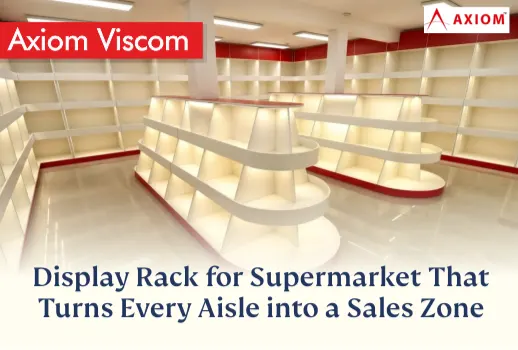
A supermarket shopper spends an average of 23 minutes inside the store. In that time, they pass hundreds of products. Most get ignored. A few get picked up. The difference, almost always, comes down to how a product is presented. A well-chosen display rack for supermarket floors does not just hold merchandise. It creates a moment of pause, a reason to look, and often, a reason to buy. That is the kind of work good racking does, quietly, aisle after aisle.
Most supermarket owners treat aisle layout as a logistics problem. The real question is different: which product should a customer see at eye level, and at what point in their walk?
Placement drives purchase behaviour in ways that pricing often cannot. A product sitting at the back of a lower shelf will consistently underperform the same product placed at eye level in a well-structured bay.
Display racks for retail stores, when specified correctly, give store planners the tools to answer these placement questions with precision. Height, depth, shelf pitch, and gondola width all feed into the outcome.
Steel and powder-coated racks have become the standard across organised retail in India, but the specification within that category varies considerably between suppliers.
A rack that corrodes within 18 months of installation, or one whose shelves begin to bow under load, creates replacement costs that far exceed the original saving on procurement.
Reputable display rack manufacturers supply technical data sheets with each product, covering load ratings, coating specifications, and compliance with relevant Indian standards. That documentation matters at handover.
For supermarkets in coastal cities or high-humidity environments, hot-dip galvanised finishes or stainless-steel uprights are worth the premium. The rack budget is a capital decision, not just a fitout line item.
A rack is a structure. Visual merchandising is the strategy that makes that structure earn its floor space. Both need to be planned in parallel.
Shelf talkers, price channel strips, product dividers, and pusher systems all mount onto the rack itself. If the rack profile does not accommodate standard accessories, the merchandising team works around limitations rather than with them.
Display rack manufacturers in Delhi who supply to organised retail chains typically offer accessory catalogues alongside their rack systems. Asking for this at specification stage saves significant rework during fit-out.
Lighting integration is another consideration that gets missed. Racks designed with LED strip channels built into the upright create a very different in-store atmosphere compared to overhead-only lighting schemes.
Organised retail in these two cities has matured faster than in most other Indian metros. The result is a visible gap between supermarkets that invested in specification and those that did not.
Display rack manufacturers in Mumbai have had to meet increasingly precise briefs from large-format grocery chains, quick-commerce dark stores, and hypermarket operators. That commercial pressure has raised the quality of available products across the market.
Stores in tier-two and tier-three cities now benefit from that development. The same rack systems and accessory platforms that were exclusive to metro retail five years ago are now accessible at competitive price points nationwide.
For a supermarket in Pune, Surat, or Lucknow, specifying to metropolitan standards is both achievable and commercially sensible. The shopper expectation of a well-merchandised store is no longer limited to major cities.
A supermarket floor is a commercial asset. Every shelf, every bay, and every end-cap position either earns its keep or does not. The rack system underneath it all determines which outcome is more likely.
At Axiom Viscom, we work with supermarket operators and retail brands across India to specify, fabricate, and install rack systems that are built for long-term commercial performance. Our team handles everything from initial layout planning to final installation, giving store owners a single point of accountability across the entire project.
If you are planning a new store or upgrading an existing one, we are ready to walk the floor with you.
Your store opening or refit deserves a rack system that performs beyond Year 1, not just on launch day. Get in touch with our team for a specification-focused conversation.
Schedule a 30-minute strategy discussion with our retail infrastructure team today.
What is the ideal display rack for supermarket aisles with mixed product sizes?
Gondola racks with adjustable shelf pitch handle this well. You move the shelves up or down as the range changes, no replacement needed.
How do display rack manufacturers in Delhi differ from those in Mumbai?
Delhi fabricators tend to build heavier, larger systems for warehouse-style stores. Mumbai suppliers are more practised at fitting high SKU counts into tighter floor plans.
What load rating should display racks for retail stores carry?
For general grocery, 80 to 100 kg per shelf covers most categories. Beverages and bulk staples need racks rated higher, confirm this with your supplier before ordering.
How long do powder-coated steel racks last in a supermarket?
Most well-built racks run eight to ten years without structural issues. Coastal stores are the exception – humidity accelerates corrosion if the coating specification is not right from the start.
What should I ask display rack manufacturers before placing a bulk order?
Ask for the load-rating sheet, finish specification, and a written lead time. If they cannot produce those three things quickly, that tells you something useful about how they operate.
Speak with our retail display experts within 2 hours. Get tailored recommendations, material samples, and a no-obligation quote for your project.