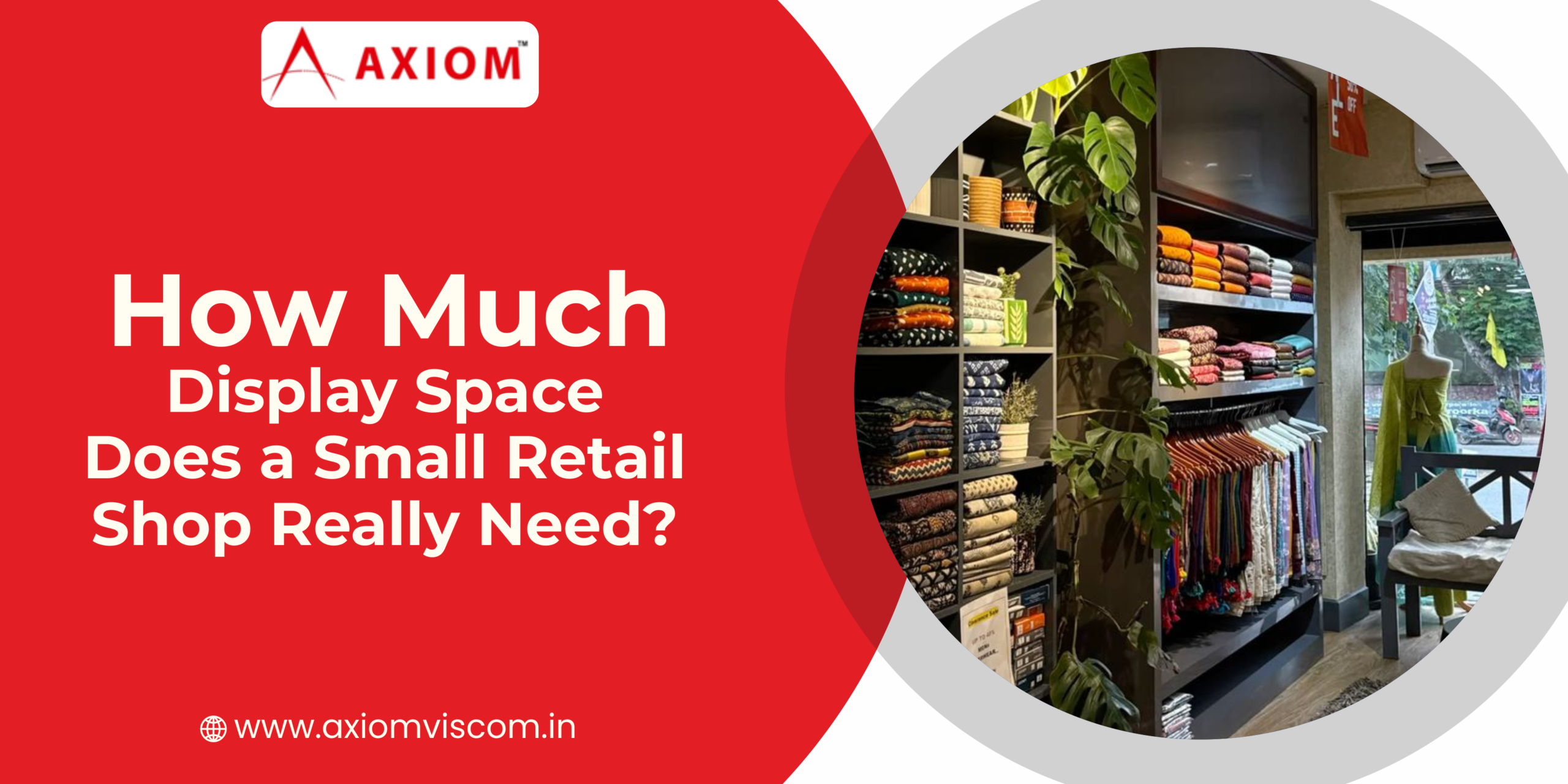
A small retail shop should give 60 to 70 per cent of its floor area to display space. The remaining 30 to 40 per cent covers aisles, the billing counter and back storage. Getting this balance right with a well-built shelf display rack lets you show more stock without crowding customers. This guide explains how to calculate your ratio, size your aisles and choose fixtures for a compact layout.
Most small shops perform well when 60 to 70 per cent of the floor works as selling space. In a 300 sq ft shop, that means roughly 180 to 210 sq ft of active display. Push beyond 75 per cent and the store feels cramped. Customers turn sideways to squeeze past, give up and leave, which costs you more than a few empty shelves ever could.
Start with your carpet area and work through three steps to finalise a shelf display rack:
If your stock needs more room than the target allows, build upwards with taller units instead of adding floor fixtures.
Wall units cost no aisle space. A good shop interior designer runs shelving from about 300 mm to 1,800 mm off the floor and places best sellers between 1,200 and 1,600 mm, where eyes land first.
Aisles in a small store should measure at least 900 mm so one person can browse comfortably. Widen them to 1,050 to 1,200 mm if two shoppers need to pass. Keep about 1,000 mm clear in front of the billing counter. A compact front counter design for shop spaces this tight should include a glass top, so the counter doubles as an impulse-buy display.
Use these ranges as a brief when you speak to display stand manufacturers about your layout.
| Shop Size | Selling Space | Fixture Mix | Minimum Aisle Width |
|---|---|---|---|
| Up to 150 sq ft | 90 to 100 sq ft | Wall racks, one counter display | 900 mm |
| 150 to 300 sq ft | 100 to 200 sq ft | Wall units, one central gondola | 900 to 1,050 mm |
| 300 to 500 sq ft | 200 to 350 sq ft | Wall units, two gondolas, one promotional display stand | 1,050 to 1,200 mm |
Modular wall units and slim gondolas suit compact floors best because they adapt as stock changes. Countertop product display stands add selling points without using floor area. Good display rack manufacturers build adjustable shelves, so one unit holds cosmetics today and festive gift packs next month. Pharmacies and mobile accessory shops benefit from shelves only 300 to 350 mm deep.
Axiom Viscom starts every small-shop project with a site measurement and a stock count, followed by CAD drawings. As retail fixture manufacturers in Delhi NCR and Mumbai, we design, build and install everything in-house, so we can trim display racks for retail stores by 50 mm when an aisle needs breathing room. After opening day, we stay in touch to see how the space performs.
For custom units, we share a sample before full production starts. You check the finish and shelf heights, then approve the shop furniture design. This step prevents costly rework after opening.
Many owners buy off-the-shelf racks instead of hiring shopfitting companies, and regret it within months. We size each shelf display rack around your actual stock. With sensible retail shop interior design, even 200 sq ft feels open.
Yes. Use light colours, slim wall shelving and bright, even lighting. Keep the centre of the floor clear and limit freestanding units to one. Mirrors on a single wall add depth. Keep the eye-level zone uncluttered, because that is where shoppers judge the room.
Wall units in small shops usually stand 2,100 mm tall, with the top selling shelf no higher than about 1,800 mm. Use the space above for backup stock or signage, since customers struggle to reach it. Keep heavy items on lower shelves for safety.
Refresh the main display every two to four weeks and rework window or entrance displays for each festival or season. Regular shoppers notice change quickly. Even swapping products between shelves makes the shop feel new and gives repeat customers a reason to look again.
Custom furniture usually pays off in a small store because every centimetre is sized to your products. Standard racks often waste depth and height. A tailored unit holds more stock in less floor area, and it lasts longer when built from metal or engineered wood.
Speak with our retail display experts within 2 hours. Get tailored recommendations, material samples, and a no-obligation quote for your project.