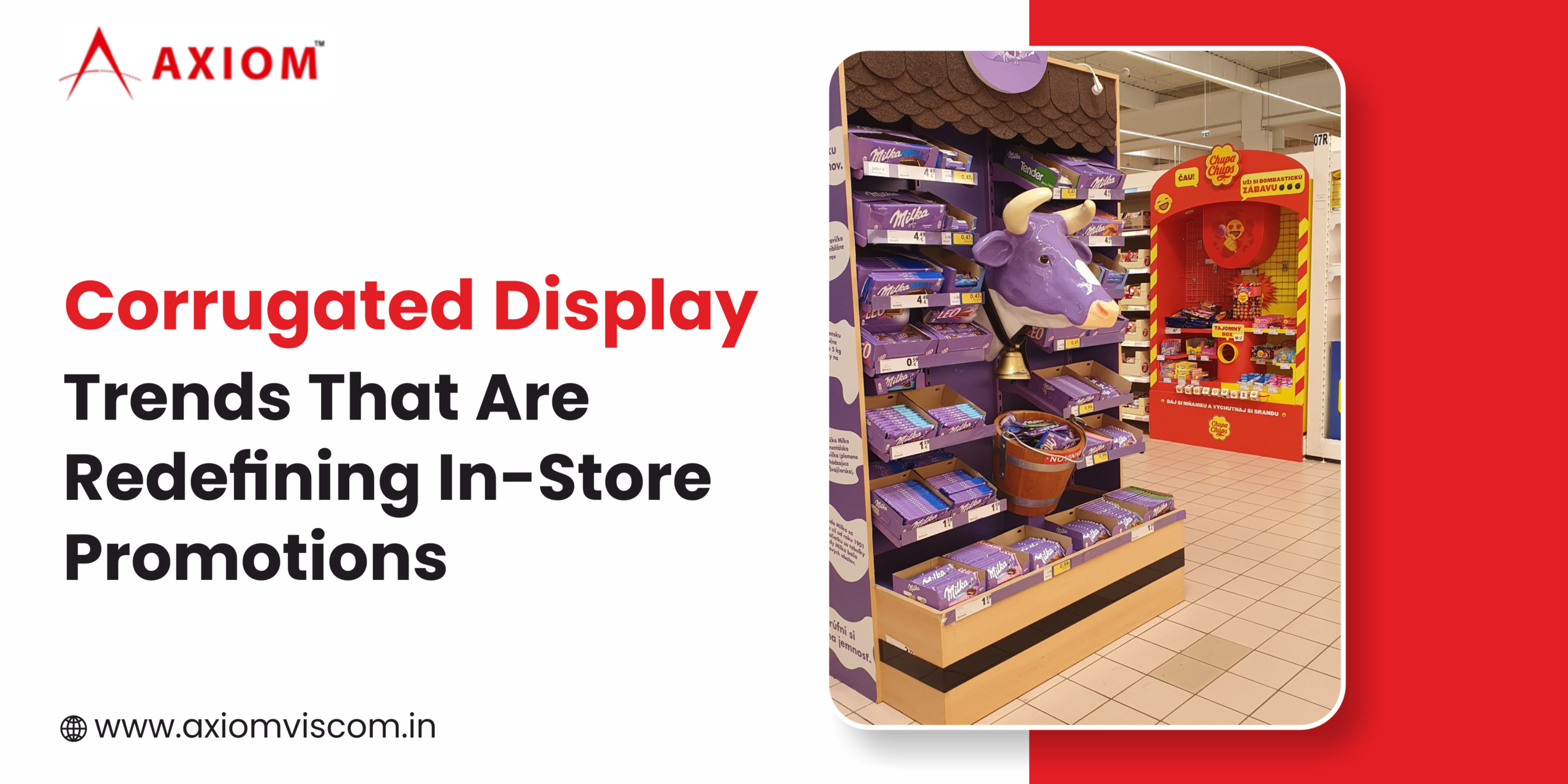
Walk into any well-run retail store right now and something will catch your eye before the product does. It is the display around it. Corrugated shop display stands have quietly become the most underrated tool in a brand’s promotional arsenal – fast to produce, sharp to look at, and easier to deploy across 40 cities than any metal fixture ever will be.
Five years ago, a corrugated standee meant one thing: a cheap, short-term fix. Brand managers tolerated it. Procurement heads approved it reluctantly. That attitude has completely reversed.
What changed? Brands started paying attention to what actually stopped shoppers. Not the shelf. Not the backlit panel. The structure sits right at eye level, at the aisle end, near the checkout counter. That was usually a corrugated unit.
Once teams started measuring dwell time and pick-up rates near corrugated displays versus standard shelving, the numbers made the case on their own. Corrugated point-of-purchase displays, when properly engineered, outperform static shelves in promotional contexts across FMCG, personal care, electronics, and lifestyle categories.
This is the trend that surprises most marketing managers when they first hear it. The shape of a corrugated display is now a branding asset.
Die-cut units that mirror a brand’s packaging silhouette. Multi-tier gravity-feed structures that keep the product face-forward without staff intervention. Header panels that create a visual block from ten feet away. None of this requires a single line of promotional copy to communicate brand identity.
Visual merchandising teams in Delhi and Mumbai are increasingly specifying corrugated as a first choice, not a budget fallback.
A procurement head at a national retail brand once put it plainly during a briefing: “We need to know where this goes when the campaign ends.” That question is being asked more often now, and corrugated displays are one of the few display formats that answer it cleanly.
Recycled corrugated board with water-based inks and biodegradable laminates is not a premium add-on anymore. For brands in organised retail across NCR, Pune, and Mumbai, it has become a baseline specification. Shoppers in metro markets are noticing, and in some categories, that environmental communication at shelf level is actively influencing purchase preference.
From a pure cost standpoint, corrugated also holds up well. For brands managing seasonal changeovers, the cost-per-deployment on corrugated is significantly lower than permanent fixture replacement. A well-designed corrugated unit that runs for 60 to 75 days and gets recycled cleanly is cheaper, faster, and cleaner than most alternatives.
Here is something that does not get discussed enough in retail design conversations: the operational value of a display format that can change its face without changing its bones.
A corrugated pallet display built for a national brand’s Diwali campaign in Delhi can carry New Year creative in Mumbai and a regional sports activation in Hyderabad simply by swapping the outer graphic sleeve. The structural unit stays the same. Only the print changes.
For franchise expansion heads managing rollouts across multiple states on a fixed marketing calendar, this kind of flexibility is not a nice-to-have. It is the deciding factor.
Any retail project manager who has handled a multi-city rollout will recognise this situation. The display looked perfect in the design file. The print was approved. The production run completed on time. Then the units arrived at a store and the base had warped from humidity. Or the header panel buckled under its own weight after three days.
Those outcomes are not bad luck. They are what happens when prototype validation gets skipped to save two weeks.
A corrugated promotional display stand that is properly sampled, loaded, and stress-tested before bulk production can reduce display replacement costs from 25 to 30 percent of campaign budget down to below 8 percent. For a brand running 50 stores simultaneously, that difference is significant enough to cover the cost of several future campaigns.
The prototype stage is where display rack manufacturers in Delhi or Mumbai either prove they understand retail conditions or reveal that they only understand print production. Those are two very different things.
Corrugated displays have moved a long way from the temporary fix they were once considered. The trends covered here are active across organised retail in India right now — structural branding, sustainable substrates, seasonal adaptability, digital integration, and rigorous prototype validation.
At Axiom Viscom, one of the top display stand manufacturers Mumbai and Delhi, we have built corrugated display programmes for brands rolling out across Delhi, Mumbai, and well beyond. From the first structural sketch to the final store installation, we handle the process end-to-end. If your next promotional campaign needs a display partner who has been through the pressures of real retail floors, let us have that conversation.
Schedule a 30-minute strategy discussion with our team. Write to us at sales@axiomviscom.in.
What is a corrugated point-of-purchase display?
A corrugated POP display is a temporary or semi-permanent retail unit made from structured corrugated board, placed at high-attention zones such as aisle ends, checkout counters, or promotional floor areas.
How long does a corrugated display last in a retail store?
A laminated corrugated display unit typically performs well for 60 to 90 days under standard retail conditions. High-humidity environments such as coastal cities may shorten this to 45 to 60 days.
Can corrugated displays handle a multi-store national rollout?
Yes. Corrugated is one of the most practical formats for national rollouts. Units ship flat, assemble quickly on-site, and can be produced at scale with consistent print quality across all locations.
What makes a corrugated display sustainable?
Post-consumer recycled corrugated board paired with water-based inks and biodegradable laminate makes a display fully recyclable at end of campaign. This meets the sustainability procurement criteria of most organised retail formats.
Is prototype approval necessary before bulk corrugated production?
For any rollout of ten stores or more, prototype approval is essential. It validates structural integrity, print accuracy, and on-floor performance before committing full budget to production.
How is corrugated display design different from permanent fixture design?
Corrugated displays are engineered for a defined campaign lifespan, typically 30 to 90 days. Permanent fixtures use metal, acrylic, or wood and are designed for multi-year use. The design brief, material choice, and cost structure are fundamentally different.
Speak with our retail display experts within 2 hours. Get tailored recommendations, material samples, and a no-obligation quote for your project.